

Driver check-in is still a weak point at most industrial sites. Every day, a truck reaches the gate. Often, the driver doesn’t speak the local language. The officer hands over a laminated sheet. Then they ask the driver to sign a document they haven’t understood. As a result, the truck heads to the wrong dock.
« Our first competitor is the sheet of paper, » says Estelle Valéri, head of PrivaMap. It’s not a quip. Indeed, it reflects the real state of driver check-in at most industrial sites in 2026.
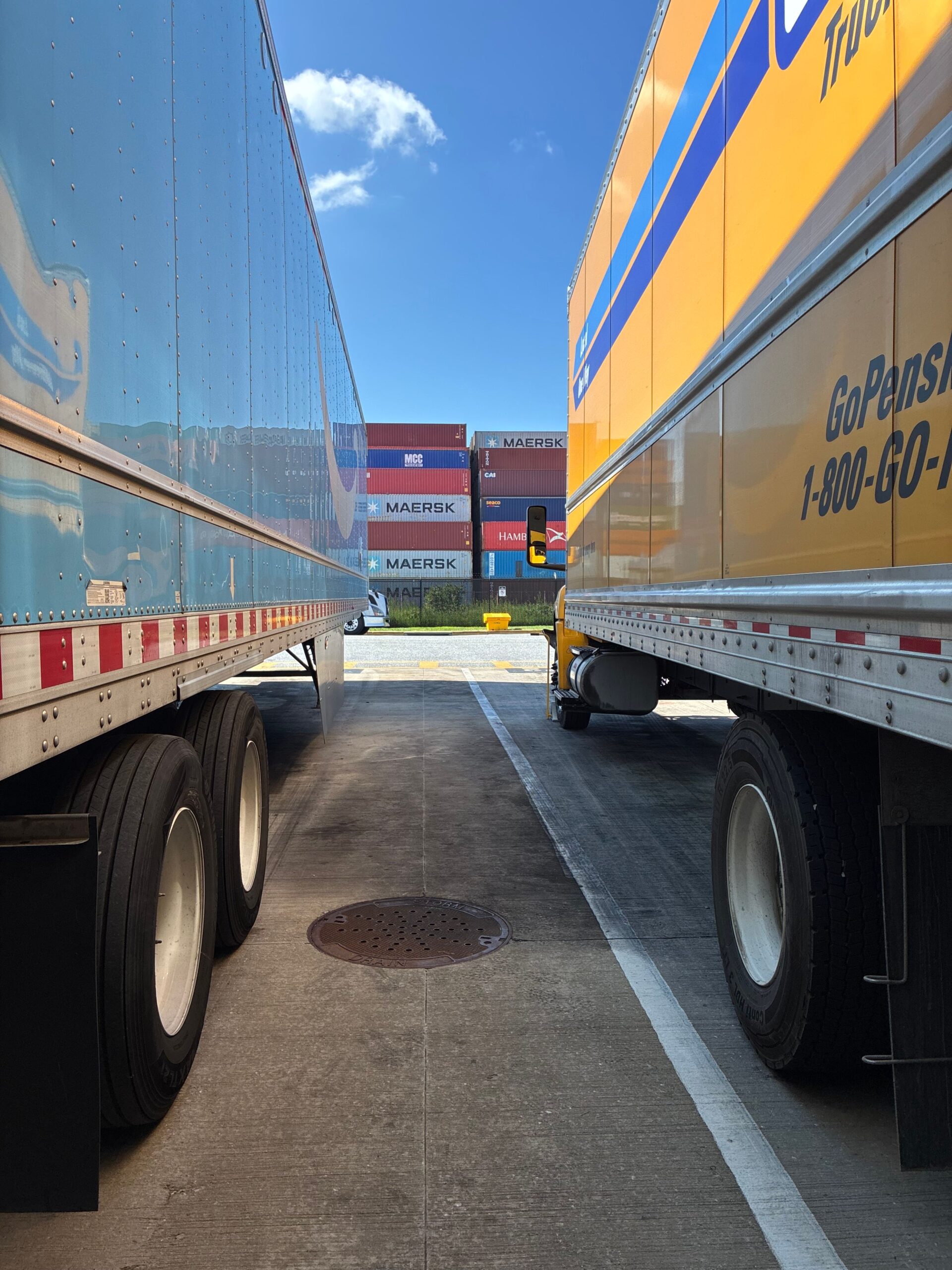
Paper-based driver check-in: a poorly applied obligation
First, the framework. In France, a safety protocol is mandatory. It is set by articles R.4515-1 to R.4515-11 of the Labour Code and the decree of 26 April 1996. It applies to every loading or unloading operation.
Moreover, the document must be drawn up beforehand. It describes site risks and traffic rules. Finally, it collects the driver’s signature. In case of an accident, a missing protocol engages the site manager’s criminal liability.
Yet, in the field, this protocol often stays on paper. It exists in one language only. Besides, it is rarely kept up to date.
The language barrier, an underestimated risk
Next comes language. Industrial sites receive drivers from across Europe. A driver who hasn’t understood isn’t pretending. Indeed, they do their best with what they grasped. However, on a high-risk site, one misunderstanding can trigger a serious chain of events.
What a digital driver check-in changes
Concretely, here is the journey with PrivaMap. The driver gets a QR code at the gate. They scan it with their phone, without any app. At once, the protocol appears in their language, detected automatically. Then they sign electronically, with a timestamp. Finally, the proof is archived automatically. Thus, every check-in becomes traceable for the HSE manager.
Geoguidance, a distinct and complementary product
Importantly, there are two products. The digital protocol covers check-in and compliance. Real-time geoguidance covers movement on site. Indeed, signing is one step; finding your dock on 80 hectares is another. Therefore, geoguidance guides the driver step by step, like a GPS adapted to a private site. Besides, equipped sites report on average 15% less time on site.
The Port of Calais testimonial
Anthony Pétillon leads strategy and development at the Port of Calais. According to him: « Image, logistics performance, economic performance: with PrivaMap, we win on every front. » Before, travellers got lost and ferry companies searched for them. Now, that unproductive work is gone.
Which sites is a digital driver check-in for?
In short, a few simple thresholds. The approach fits from 25 hectares. Likewise, from 25 external trucks a day. It also targets multilingual sites and high-risk zones: SEVESO, ATEX, heavy handling. Concretely, this covers petrochemical sites, port terminals and logistics platforms.
PrivaMap is a SaaS solution for outdoor geoguidance and digitalised safety protocols for large sensitive sites. Read also la version française.