


A container terminal ranks among the most complex environments for land-side flows. Indeed, cranes, storage zones, lanes, customs control and weighing all overlap continuously. Moreover, dozens to hundreds of trucks move through each day. In addition, the drivers come from many different nationalities. Finally, they drive under strict deadlines, among moving handling equipment. 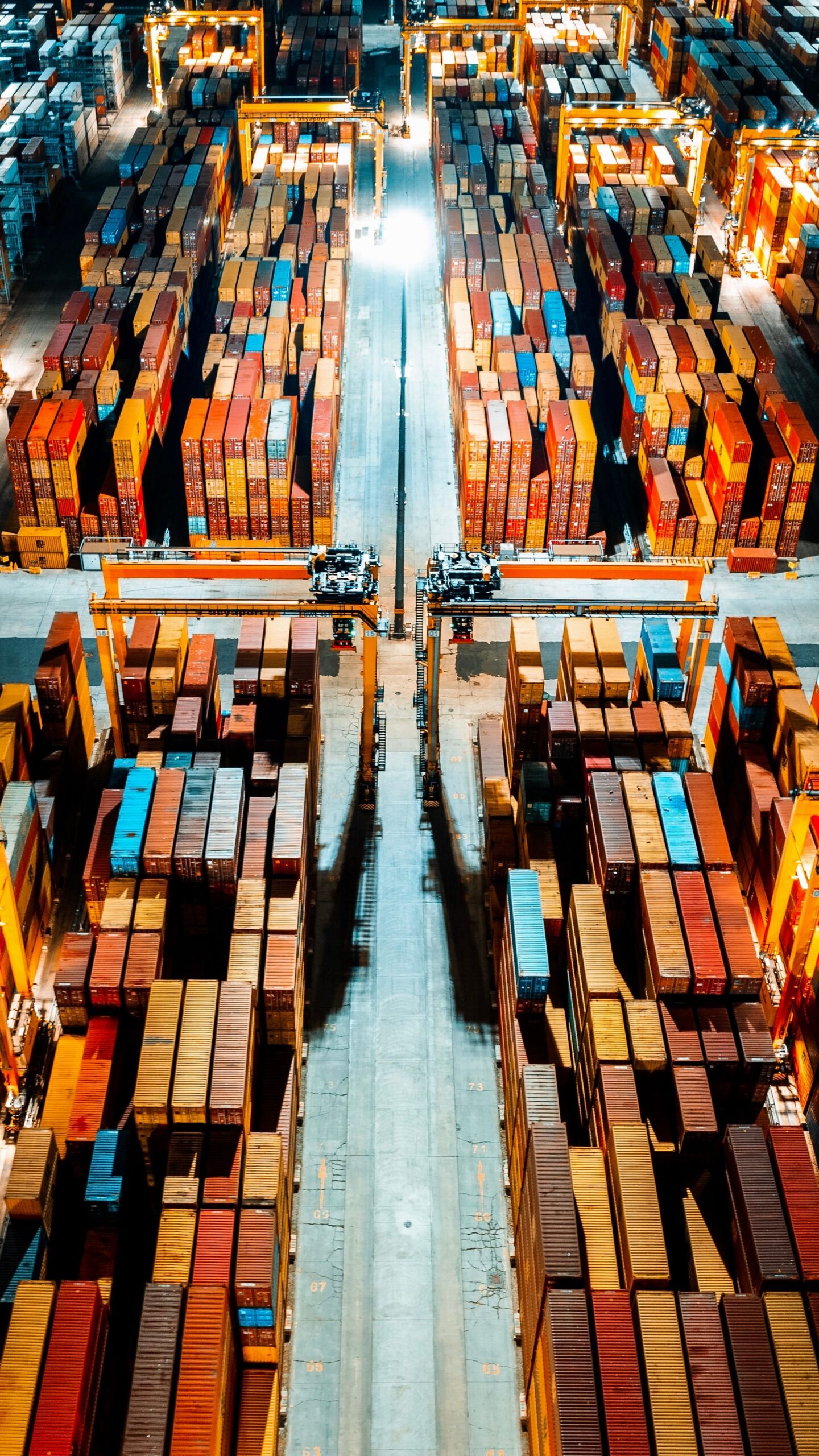
What makes a container terminal specific
First, the time slots remain non-negotiable. Therefore, a late truck immediately shifts the crane sequence. Next, the site feels like a maze for newcomers. Moreover, the drivers are international. As a result, a misunderstood instruction becomes an incident precursor. Finally, the safety protocol stays mandatory. However, it is rarely optimised across hundreds of rotations.
What disorganisation costs
In a container terminal, the gatehouse agent explains the route to every driver. Yet the language barrier and a paper map complicate the exchange. Next, agents spend time redirecting drivers by phone. As a result, a truck sometimes strays into an unplanned lane. Consequently, it exposes itself to co-activity zones.
Two complementary products
On one hand, the digitalised protocol covers the welcome. Thus, the driver reads and signs in their own language. Moreover, the system handles timestamping and archiving. On the other hand, geoguidance covers the movement. In practice, it guides step by step to the assigned block. Furthermore, it flags forbidden zones and the traffic direction. In addition, a dashboard tracks the flows in real time. Finally, an instant alert triggers in case of incident. Besides, equipped sites record 15% less time on site. For the welcome stage, see our industrial driver welcome protocol.
Which container terminals benefit?
Generally, the equation becomes favourable from 25 hectares. Likewise, it holds from 25 external rotations per day. Add to this operators of different nationalities. Finally, intensive co-activity zones strengthen the case.
Three questions to assess the gain
First, how long does a driver spend between the gate and the block? Second, how many calls does the gatehouse receive each day? Third, in case of incident, are the drivers on site alerted immediately? A well-supervised container terminal answers these three points with confidence.
PrivaMap equips port terminals and sensitive industrial sites, in France and internationally. privamap.com