

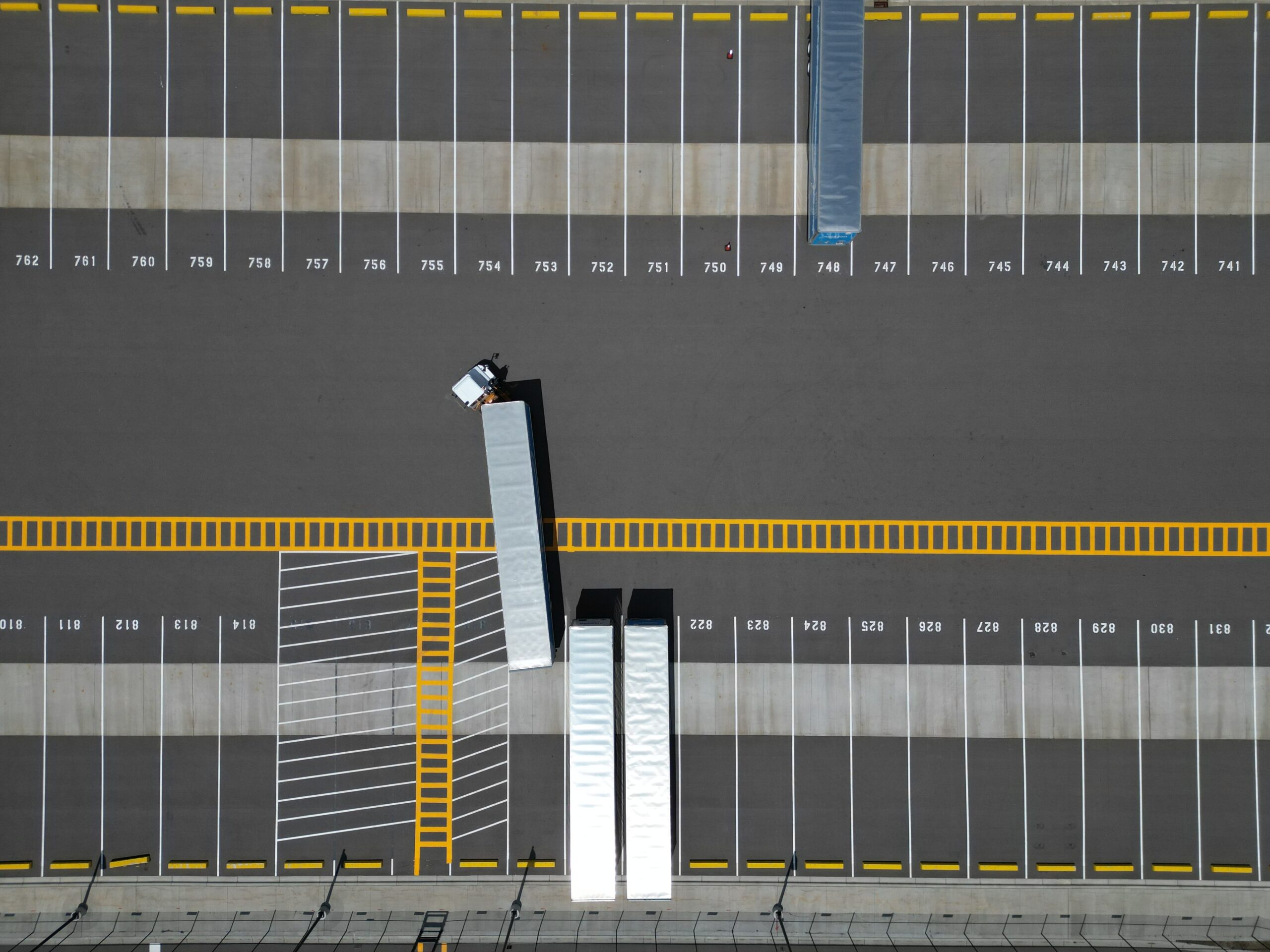
Truck turnaround time on site, from the gate to the exit, is a rarely tracked indicator. However, it is costly. On a site that receives dozens of heavy vehicles each day, a few minutes saved per rotation clearly raise throughput. In other words, every minute counts.
Where truck turnaround time is lost
First, the driver presents the delivery note at the gate. Next, he follows a route on a paper map. Then he signs the safety protocol. Finally, an agent directs him to the dock. If the driver does not speak the local language, the duration doubles. Therefore this stage takes 5 to 20 minutes. On site, a driver who does not know the place looks for his way. As a result, he takes the wrong aisle and calls reception. At the dock, a wrong slot stretches the wait further.
Lever 1: smooth the check-in
First, the digital protocol speeds up check-in without removing it. The driver signs in his own language, in two minutes, on his smartphone. Thus the agent is freed for the checks that cannot be delegated. Moreover, the signature stays time-stamped and archived.
Lever 2: guide with geoguidance
Geoguidance is a distinct and complementary product. Guided from the gate to the dock, the driver no longer gets lost. As a result, he does not call and enters no restricted zone. Moreover, geoguidance relies on the smartphone GPS, without infrastructure. Thus equipped sites report 15% less time on site.
Lever 3: steer flows in real time
The dashboard shows the trucks present in real time. It also displays their position and the congestion points. Without data, it is impossible to know where time is lost. Conversely, with data, the corrective action becomes targeted. Thus cutting truck turnaround time becomes concrete.
Lever 4: remove the language barrier
A driver who does not understand nods, then searches alone. This is why the losses described appear. Fortunately, both products work in several languages. Moreover, the language is detected automatically. The same logic drives our guide on digital driver check-in.
What the Port of Calais says
Anthony Pétillon leads strategy and development at the Port of Calais. According to him, the companies used to look for lost passengers. That unproductive work is now solved. Thus they improve their economic performance.
PrivaMap: outdoor geoguidance and a digital safety protocol for large industrial, port and logistics sites. In the end, cutting truck turnaround time becomes an achievable goal. privamap.com